Monday, September 30, 2013

Copyrights in Education

     Copyrights play a major role in protecting individuals from having their works stolen or reproduced and also gives the copyright holder the right to be credited for their work. The copyright was originated with the development of the printing press. It was established after there was concern about the unregulated copying of books. England's Parliament passed the Licensing of the Press Act 1662 that established a register of licensed books. The US developed the Copyright Clause in the US Constitution in 1787.
     The goal of Copyright is to continue to stimulate creativity amongst people. Brankos Weblog does an excellent job in explaining how copyright continue to foster creativity by protecting peoples works. If anyone could freely copy and make money off of other peoples creations and ideas than people would be less inclined to put in the work of coming up with new ideas if they know anyone could take it and make money off of it as if it were their own. Why do all the work if you could just as easily take someone else's ideas and make money off of them, that's a lot easier. Copyright laws prevent this and continue to ensure that peoples creative works are protected which allows everyone equal creative protection.
     One area that copyright does not protect against copying is when such reproduction falls under "Fair use and fair dealing". Fair use is not clearly defined and is in a way open to interpretation in some ways. It does give four non-exclusive factors to consider in a fair use analysis. These factors include:
  1. the purpose and character of your use
  2. the nature of the copyrighted work
  3. what amount and proportion of the whole work was taken, and
  4. the effect of the use upon the potential market for or value of the copyrighted work
These factors are a guideline to follow and can be very important when considering using works for the purpose of educational aides in todays classrooms. With technology becoming more available to students at all grade levels teachers must be aware of the fair use policies when using works, including music in their own or student presentations, and when using copyrighted works to supplement instruction. Columbia University Libraries has a very informative site that does an excellent job in describing fair use, provides a fair use check list, guidelines, and provides case summaries as well.
     As a teacher I feel that I need to be very aware of how I am using copyrighted works in my lessons and activities to ensure that they fall under fair use. Fair use statute explicitly lists teaching as an acceptable use but I also have to be sure that the work is transformed and not merely copied in its entirety. The quantity used of a work is also important. I know as an educator I can not simply copy a whole book or document to be used in class. It is important to only use necessary passages to supplement your intended lesson and purpose. As I enter the classroom in the next few years I will be mindful of what I and other teachers are using in our classrooms and ensure their use fall under the fair use guidelines.

Video Credit: Renee Hobbs via YouTube.com


Photo Credit: Renee Hobbs

 
Photo Credit: Meredith Atwater
 

Monday, September 23, 2013

Digital Citizenship


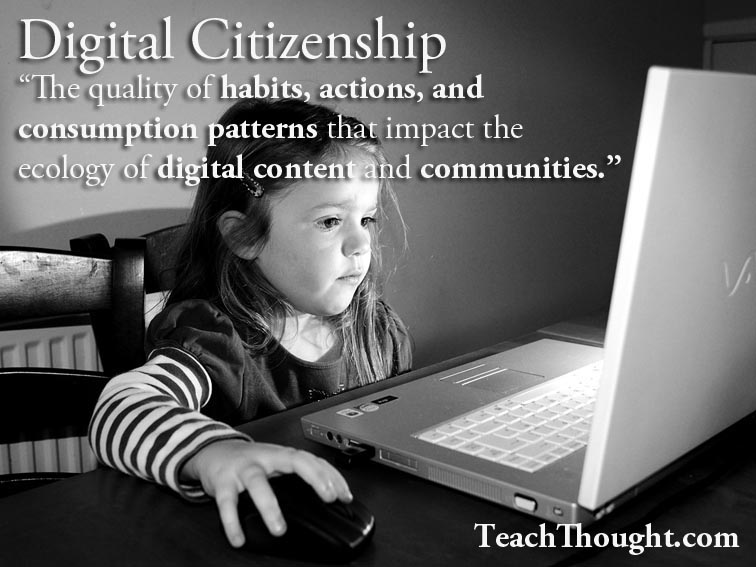
Digital Citizenship is important to teach to students as many do not understand how the pictures they post or things they say via digital media can adversely affect them in the future. Many of us have seen or heard of someone being judged by their Facebook or twitter posts or even by text messages they gave sent to a friend or coworker. While we have now learned form our own mistakes or the mistakes of other concerning digital citizenship many of our students have not. It is our job as educators to make them aware of the consequences they may face based on what they post online and provide them real world examples that they can relate to.

I value the ability to see how people interact online when they feel safe behind a keyboard. Many people are completely different when you converse with them than what you may see in their online lives. George Corous wrote a very informational and eye opening blog concerning digital citizenship. He showed teachers the posts of two students that went to their school who teachers said were model students. The things the teachers seen were far from what they expected from those students. It shows the many faces that people can display and the importance of teaching students the importance of digital citizenship.

I think that we can implement social media in some form in our classrooms to introduce them to proper uses and acceptable practices. If we can reach students early enough and open their eyes to the affects social media can have on their lives we may be able to set students up for success in terms of digital citizenship and their on line lives.

Photo Credit:Thomas Galvez


Photo Credit: http://www.teachthought.com/technology/the-definition-of-digital-citzenship/


http://www.youtube.com/watch?v=oCkTmZ0bF5Q

Monday, September 16, 2013

The Digital Divide

What is the Digital Divide? Why is it important to teachers? Use data to back-up your argument.

As smart phones, tablets and laptops become increasingly popular in todays society it seems only logical that students begin to use them in our classrooms. They engage students in lessons and offer them new ways to experience the material. As more and more Americans own these devices throughout the U.S. many tend to forget just how many people still have no access to such devices or even the internet. This lack of connectivity creates what many call the "Digital Divide". It is the gap created between those with and without access to technology and the world wide web. This is not only an issue in our own country but creates a divide amongst countries all over the world. How Countries compare

As teachers we must be aware of this divide and the potential that we will have students in our classrooms with a wide range of technology access. This can range from students with tablets, PC's, and smart phones at their disposal 24/7 to students whose only chance to use a computer is in school. This creates a very wide gap in students' abilities to complete various types of projects, papers, and presentations both in school and after school. We can not assume that students have access to technology at home and never assume that every student will be able to effectively use a device or program. This means we have to talk students through processes that many may find easy to ensure that every student, regardless of familiarity is able to effectively use the technology we intend to use in our classrooms.

Internet users have increased dramatically over the last 20 years but it is still not available in every home across the United States either due to lack of service or affordability. This drastically impacts the people in the lower economic levels and sets up another barrier for them in terms of accessibility. As of Dec 2012 there were still 4% of Americans using dial up internet which is far too slow for todays internet packed with videos, detailed graphics, and large image files. At the same time 65% had access to broadband. This means at the end of 2012 31% of American homes were with out internet. This lack of connectivity directly impact how we can assign work, communicate with parents, and how effectively students can do research after school hours. The Divide is real and we as educators have to be aware of it!
photo credit: wik.uiowa.edu
photo credit: wik.ed.uiuc.edu
http://www.minnpost.com/minnesota-blog-cabin/2013/04/digital-divide-statistics-dont-give-whole-picture-gap-real
http://wik.ed.uiuc.edu/articles/a/c/c/Access_Group_3_SU_09_1758.html

Tuesday, September 10, 2013

Digital Natives


The idea of digital natives is logical however I do not believe in it completely. I do think that is easier for someone who has grown up with technology to learn and adapt to new technology over someone who is new to technology in general. That idea has been brought up, discussed and proven over time. The idea that we have to overhaul teaching due to kids growing up with technology is too far for me. I did learn that we need to be more aware of students abilities and find new ways to utilize technology to increase students learning. In the article it just sounded as the solution to the new generation is to make everything into a game. In order to keep students engaged we need to find games for each subject, I do not think that is the answer. Life is not a game and if that is the only ways you can keep your students focused than you may need to rethink your career choice. While I do not personally buy into the digital natives concept completely it is impacting people in the work force. Many companies would rather hire new employees, such as engineers, who have been taught using the newest technology rather than train older higher salary workers. It is more cost effective for them to take the newer younger employee at entry salary than to train and retain an employee making far more. They would rather let the older employee go as mentioned by David Grebow. http://knowledgestarblog.wordpress.com/tag/digital-natives/ The idea of digital natives is one that makes sense but some of the extremes associated with it such as learning styles are not ones I can buy into just yet.
photo credit: Judy Baxter via Flicker

http://edition.cnn.com/2012/12/04/business/digital-native-prensky
http://www.marketingsherpa.com/article/how-to/digital-natives-versus-immigrants

Tuesday, September 3, 2013

Integrating Technology Effectively

Across every state in the U.S. school districts are moving to put more technology in the hands of students and teachers as a new and exciting form of educational aids are developed. Teachers are finding new web 2.0 tools and software to utilize that help to keep students engaged and excited about learning. Many children are surrounded by technology in their homes such as computers, tablets, and smart phones and use them daily to play games and view videos or television shows. These interactive devices keep children entertained for hours on end. If these tools can do this for children why not make them educational and find a way to incorporate them into the classroom. For the children that are not surrounded by technology at home it is even more important to get the technology into their hands at school so they can learn and be engaged in technology and devices to better prepare them for a world that relies on technology.

Integrating technology into the classroom is not as simple as adding a few computers and a smart-board  or giving every student an Ipad. Just giving them the device does no good. Teachers need to find or be given software tools that aid in the teaching of a concept or that checks for comprehension. The technology should be a supplement to instruction rather than the instruction itself. Good technology integration flows in the classroom. It moves seamlessly through the lessons as a tool to help facilitate learning and keep students engaged. Many of us remember or are still subjected to long less than exciting lectures or endless power point presentations that seem to go on forever. Students lose focus and their attention is drawn else where. Technology integration will help to keep student focus and engagement by offering them a new and exciting  way to experience the material.

I personally have not had a teacher that has integrated technology effectively in my classes. The closest to doing so was a classroom that used clickers to take attendance, and administer short quizzes to check class comprehension. While this technology was useful to the teacher it did not aid in student comprehension or engage students in a lesson. The few times teachers have tried to incorporate technology into the classroom there was always something that prevented the tool from being effective such as student unfamiliarity, lack of connectivity to the internet, or just the technologies ineffectiveness at linking to the material. Integrating technology ineffectively is in a way worse than not incorporating any at all. It can take the focus off of the lesson, waste time, and in turn lower students levels of understanding. There is a large push to integrate technology into the classroom today but if the concept is pushed onto teachers who either do not know how or are not given proper tools to assist in their content area then school district are spending millions on electronic paper weights.

http://www.educationworld.com/a_tech/tech/tech146.shtml
http://www.edutopia.org/technology-integration

photo credit: Karen Mcmillan via Flicker